How to fix a running toilet and stop wasting water
A running toilet is the most common hidden water waste in a Homestead home, and it usually comes down to a flapper, a fill valve, or a water level set too high. This guide from MW Plumbing walks through the diagnosis and the fixes, step by step.
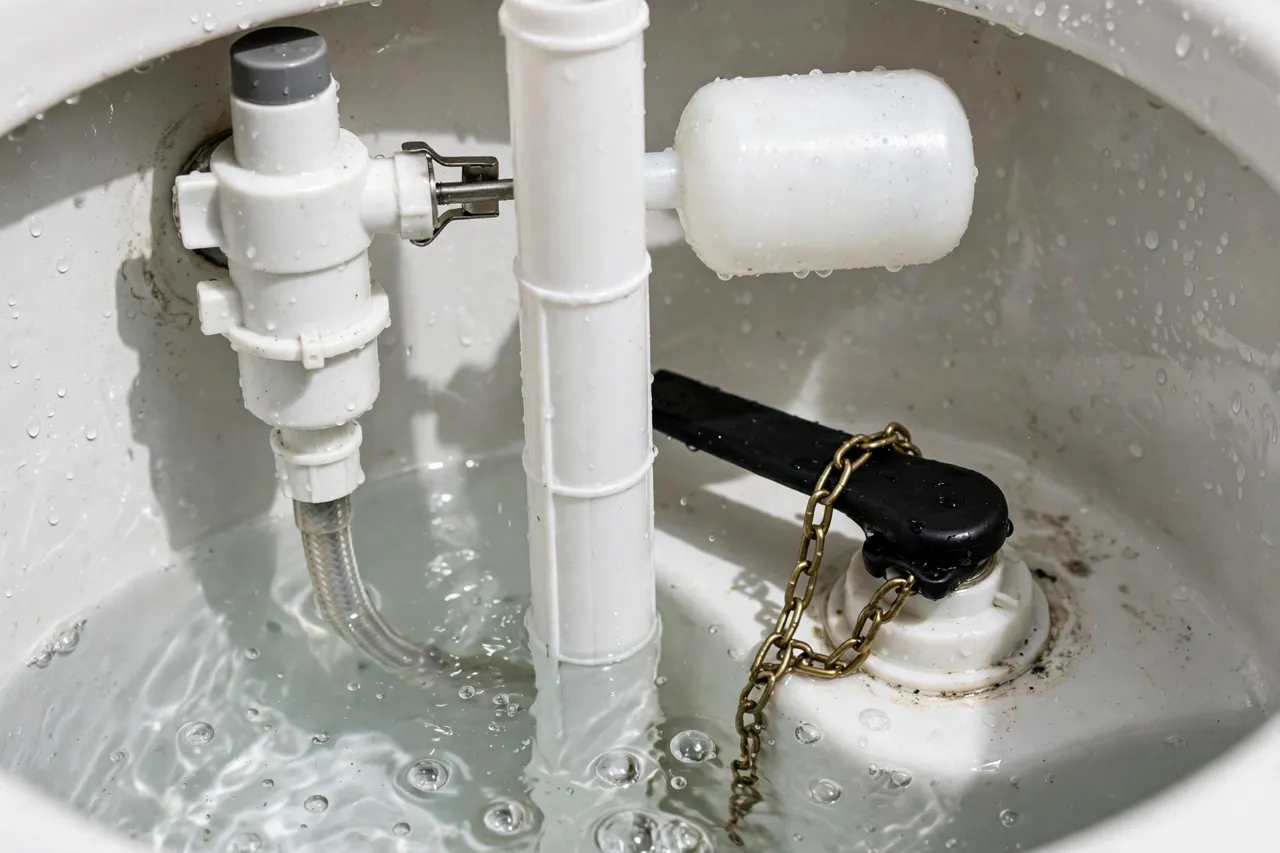
A running toilet is the most common hidden water waste in a Homestead home, and it usually comes down to a flapper, a fill valve, or a water level set too high. This guide from MW Plumbing walks through the diagnosis and the fixes, step by step.
Why your toilet keeps running after a flush
Why your toilet keeps running after a flush is almost always a seal or a level problem. The flapper is a rubber disc that seals the tank outlet; when it warps, hardens or sits on a scaled seat, tank water leaks into the bowl continuously, and the fill valve keeps topping the tank up. The second cause is a fill valve set so high that water flows into the overflow tube without stopping.
Homestead's hard water from the Biscayne Aquifer makes the first cause more likely: mineral scale builds on the flapper seat and on fill-valve parts, so a flapper that looks intact can still leak. If your toilet runs and your home has visible scale on faucets and showerheads, suspect the seat before you suspect the flapper.
How to fix a running toilet in Homestead FL
How to fix a running toilet in Homestead FL starts with the dye test, because it separates a flapper leak from a fill-valve problem without replacing anything. Work with the water on for the test, then off for the repair.
Tools and parts you will need
Food colouring, a towel, a sponge, and, depending on the diagnosis, a replacement flapper matched to your toilet model or a replacement fill valve. Take a photo of the existing parts and the model number inside the tank before you shop; flappers are not universal.
Step 1: Shut off the water and drain the tank
Turn the shut-off valve behind the toilet clockwise. If it will not turn, do not force it: a seized valve is a job for a plumber, and forcing it can snap the stem. Flush, hold the handle down, and sponge out the remaining tank water.
Step 2: Replace the flapper
Unhook the old flapper from the overflow tube pegs, wipe the seat clean of scale with a cloth, and fit the new flapper so it sits flat with a little slack in the chain. Too tight a chain holds the flapper open; too loose and the flush is weak. Restore water and run the dye test again.
Step 3: Replace the fill valve
If the dye test passes but the toilet still runs, or the fill valve hisses, sticks or will not shut off, replace it. Remove the old valve, fit the new one to the height in its instructions, reconnect the refill tube into the overflow tube, and restore water slowly while watching for leaks at the base.
Step 4: Set the water level and test
Set the tank level about an inch below the top of the overflow tube, then flush twice and watch: the tank should fill, shut off cleanly, and sit silent. Wait 20 minutes and listen. Silence is the pass mark. Our toilet repair in Homestead page covers the wider toilet problems that share these symptoms.
How much water a running toilet wastes in Homestead
How much water a running toilet wastes in Homestead depends on whether the leak is audible or silent. An audible run is obvious and constant. A silent flapper leak is sneakier: the toilet looks and sounds normal, but tank water slips into the bowl around the clock, and the fill valve tops it up in short, quiet cycles you may never hear.
That is why the dye test matters even when nothing sounds wrong, and why a water bill that climbs with no change in household habits is worth investigating at the toilets first. In a home with a bundled water bill, such as some condo sections in Keys Gate, a running toilet may not show up on your bill at all, which makes the dye test the only warning you get. See our plumber in Keys Gate page for condo-specific notes.
What affects the cost of a running toilet repair in Homestead
What a running toilet repair involves, and therefore what affects its scope, is the part at fault and the condition of the surrounding parts. A flapper swap is a small job. A fill-valve replacement takes longer and involves the supply connection. A toilet that rocks, a seized shut-off valve, or a cracked tank turns a parts job into a larger repair, and a plumber should explain that before work starts.
MW Plumbing quotes before work starts, so you approve the plan, including whether a repair or a replacement is the sensible call, before any work begins.
Common mistakes to watch out for
- Fitting the wrong flapper. A flapper that does not match the flush valve will not seal, however new it is.
- Setting the chain too tight. A taut chain holds the flapper open and the toilet runs forever.
- Setting the level too high. Water at the overflow tube is water on its way to the bowl.
- Forcing a seized shut-off valve. A snapped valve stem turns a toilet job into an emergency shut-off job.
- Ignoring a rocking toilet. Rocking means the flange or floor fixing has failed, and it will leak at the base eventually.
When to call a professional
Call MW Plumbing at (786) 523-6480 if the shut-off valve will not turn, if the tank or bowl is cracked, if the toilet rocks, if water appears at the base, or if a new flapper and fill valve have not stopped the run. Those symptoms point beyond the tank internals to the flange, the supply, or the drain connection.
Frequently Asked Questions
Why is my toilet running constantly in Homestead FL?
A toilet usually runs because the flapper no longer seals, the fill valve is set too high, or the overflow tube is letting water pass continuously. Hard water scale on the flapper seat is a common Homestead contributor: the flapper looks fine but cannot seal against a scaled rim.
How do I fix a running toilet in Homestead Florida?
Start with the dye test: food colouring in the tank, wait 20 minutes without flushing, and check whether colour reaches the bowl. If it does, replace the flapper. If the tank level sits at or above the overflow tube, lower the fill valve. If neither fixes it, the fill valve itself may need replacement.
How much water does a running toilet waste in Homestead?
A toilet that runs audibly can waste a large amount of water every day, and a silent flapper leak can waste a steady amount around the clock without any sound at all. That is why a running toilet shows up on the water bill before it shows up anywhere else, and why the dye test is worth doing even when nothing sounds wrong.
When should I replace a running toilet in Homestead FL?
Replace rather than repair when the porcelain is cracked, the tank internals have been replaced repeatedly, or the toilet is an old high-volume model that keeps needing parts. A plumber can also check whether the floor flange and supply valve are sound before you commit to a new unit.
Can I fix a running toilet myself, or should I hire a plumber?
A flapper swap and a fill-valve adjustment are reasonable homeowner jobs with the water off and the tank drained. Call a plumber if the shut-off valve will not turn, if the tank or bowl is cracked, or if the toilet rocks on the floor, which points at a flange or subfloor issue.
Get help with plumbing in Homestead
Start with the dye test, fix the flapper or the fill valve, set the level an inch below the overflow tube, and listen for silence. A toilet that sits silent is a toilet that has stopped wasting water.
Call MW Plumbing at (786) 523-6480 for toilet repair in Homestead. We are open 24 hours, every day.
Common questions
A few answers before you start.
A toilet usually runs because the flapper no longer seals, the fill valve is set too high, or the overflow tube is letting water pass continuously. Hard water scale on the flapper seat is a common Homestead contributor: the flapper looks fine but cannot seal against a scaled rim.
Start with the dye test: food colouring in the tank, wait 20 minutes without flushing, and check whether colour reaches the bowl. If it does, replace the flapper. If the tank level sits at or above the overflow tube, lower the fill valve. If neither fixes it, the fill valve itself may need replacement.
A toilet that runs audibly can waste a large amount of water every day, and a silent flapper leak can waste a steady amount around the clock without any sound at all. That is why a running toilet shows up on the water bill before it shows up anywhere else, and why the dye test is worth doing even when nothing sounds wrong.
Replace rather than repair when the porcelain is cracked, the tank internals have been replaced repeatedly, or the toilet is an old high-volume model that keeps needing parts. A plumber can also check whether the floor flange and supply valve are sound before you commit to a new unit.
A flapper swap and a fill-valve adjustment are reasonable homeowner jobs with the water off and the tank drained. Call a plumber if the shut-off valve will not turn, if the tank or bowl is cracked, or if the toilet rocks on the floor, which points at a flange or subfloor issue.
Need a local hand?
Need a running toilet fixed in Homestead? Call MW Plumbing.
MW Plumbing fixes running toilets across Homestead and South Dade, and quotes before work starts. Open 24 hours, every day. Call (786) 523-6480.